1. Bunk Beds With Built-In Storage
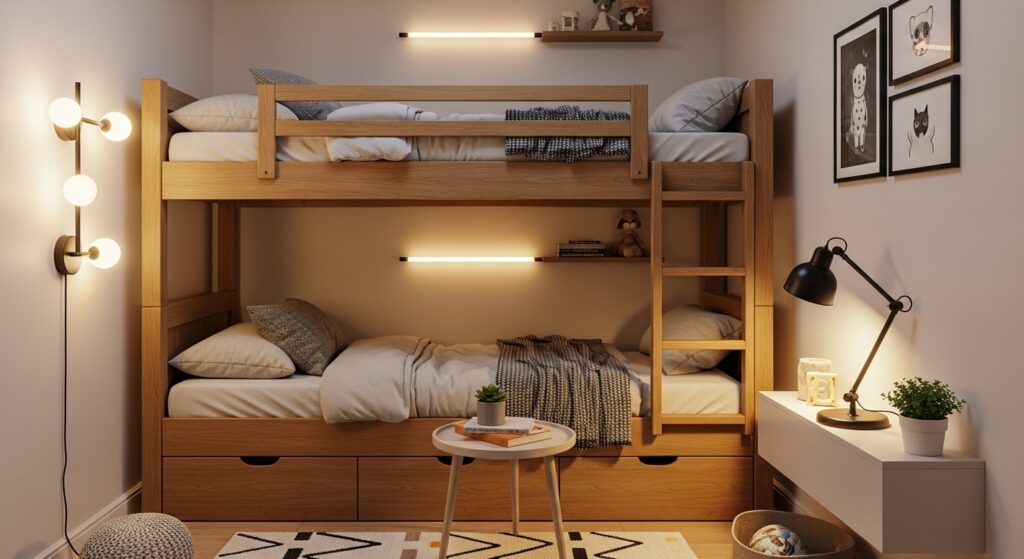
Creating extra floor space is essential in a shared room, and bunk beds make that possible instantly. Opt for a sturdy wooden or metal bunk that adds height without overwhelming the room. Built-in drawers underneath help keep items organized, reducing clutter and giving each person their own storage zone. This approach maximizes every inch while keeping the room feeling open.
Adding personal touches, like different bedding or mini wall shelves, creates individuality within the shared space. This ensures both occupants feel comfortable and recognized while still working within a cohesive design. A functional, stylish bunk bed setup instantly transforms a tight room into a practical and visually appealing retreat.
2. Color-Coded Zones
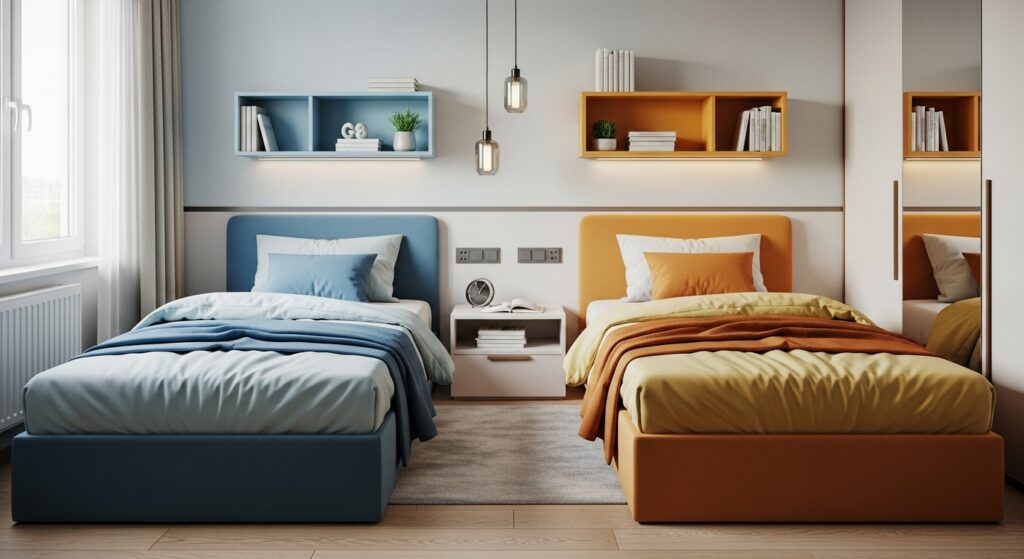
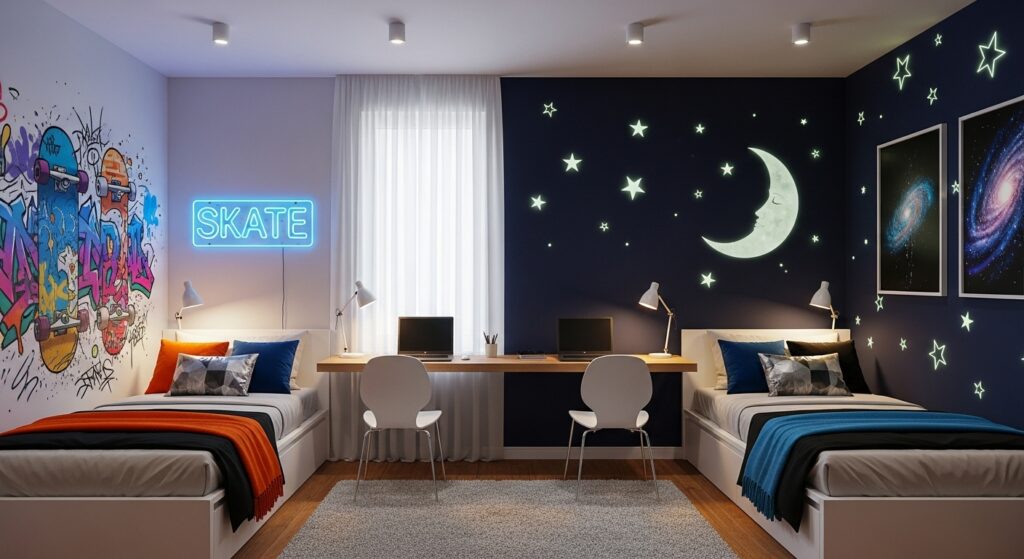
When space is limited, creating visual boundaries can help define personal space without adding physical barriers. Color-coding is an easy way to give each occupant their identity. Use different bedding, wall art, or rugs that reflect each person’s preferences while maintaining a harmonious palette throughout the room.
This technique adds personality while keeping the design cohesive and balanced. Kids and teens especially enjoy having colors that reflect their interests. Even in adult shared rooms, subtle color variations work beautifully to differentiate areas. The result is a visually engaging space that feels both unified and personalized.
3. Vertical Shelving Solutions
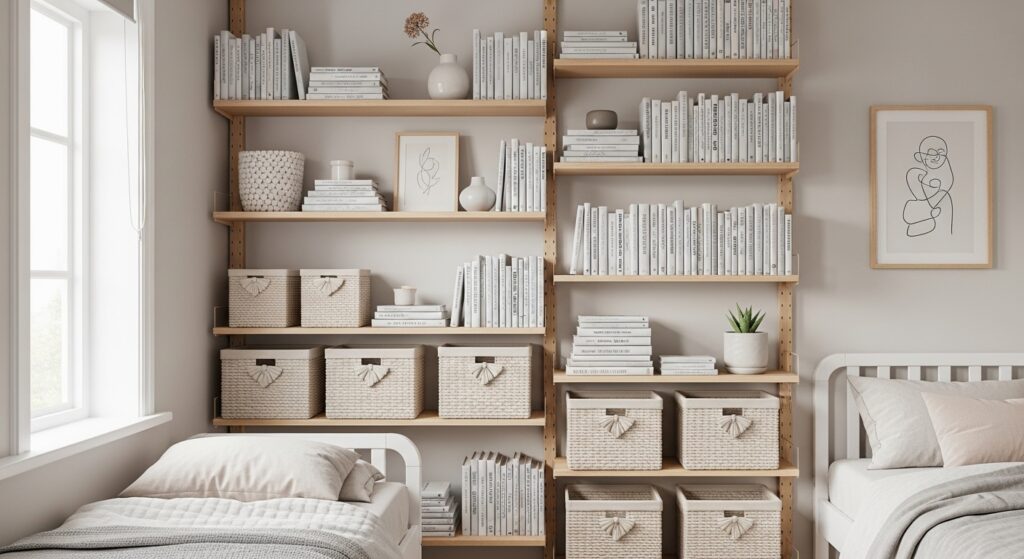
Small shared rooms often lack floor space, making vertical shelving an essential design choice. Installing shelves from floor to ceiling takes advantage of unused wall space and maximizes storage. Each person can have their own shelf section, preventing clutter and giving everyone equal access to their belongings.
With thoughtful styling, vertical shelves also serve as decorative elements. You can place baskets, books, plants, and curated displays to create personality while keeping everything tidy. This setup helps the room feel larger and more organized without sacrificing design.
4. Twin Beds With a Shared Nightstand
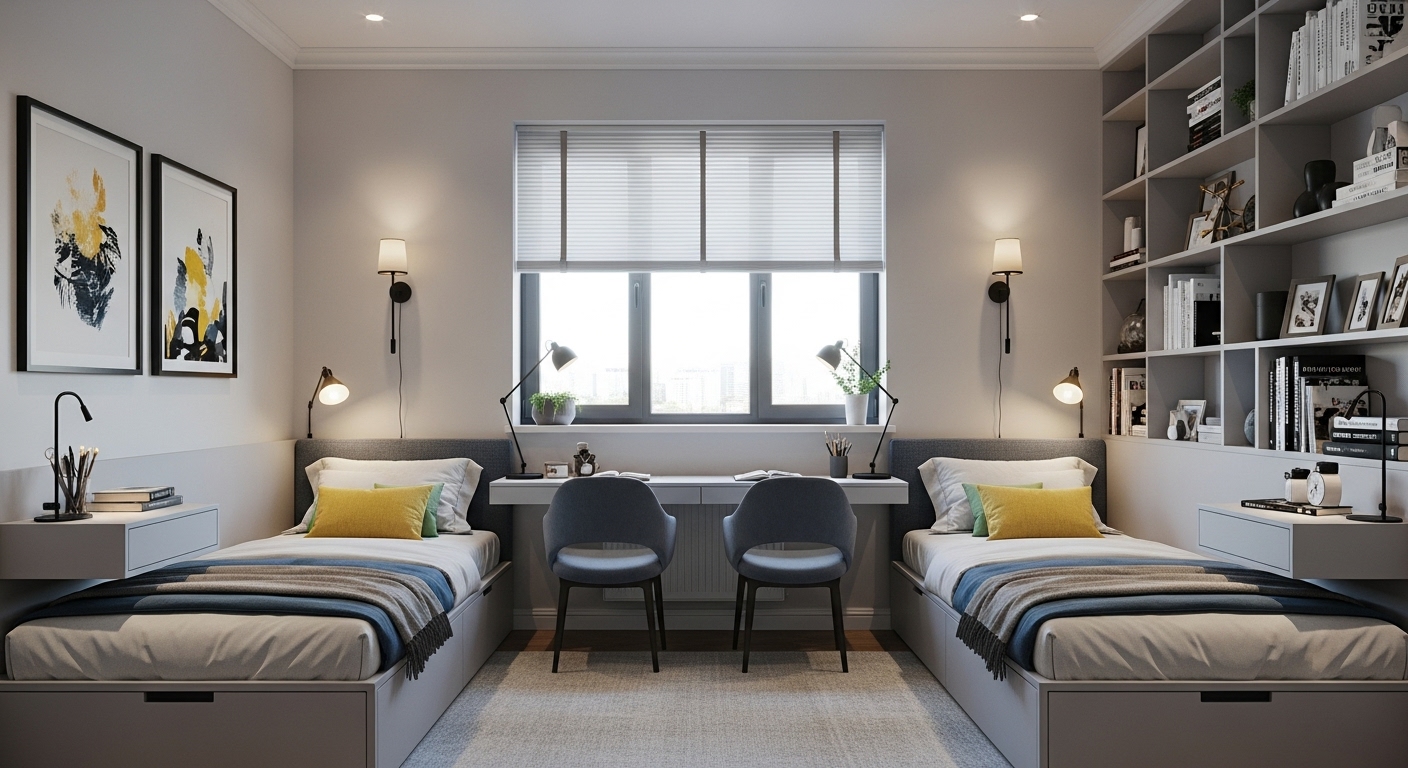
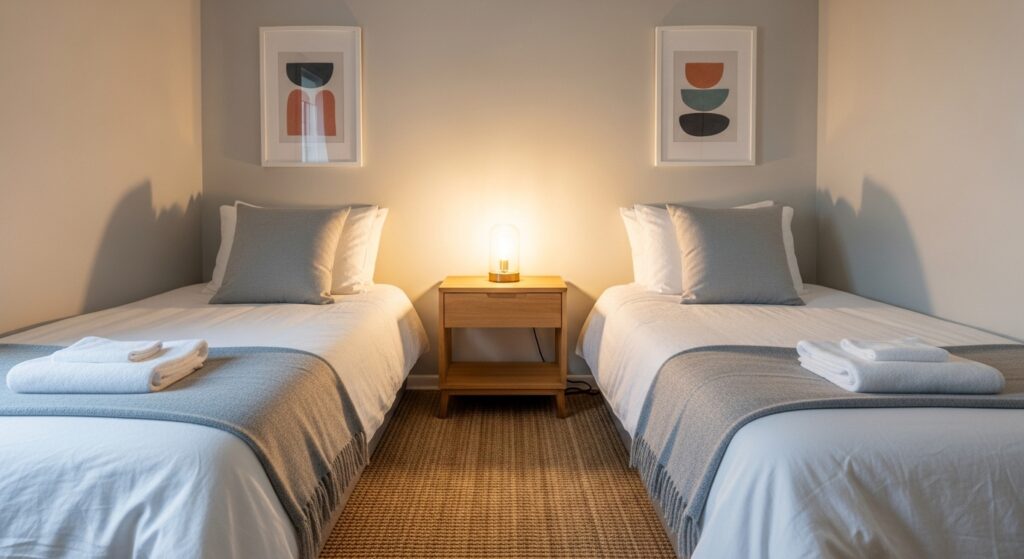
Placing twin beds parallel with a shared nightstand in the middle creates a balanced and symmetrical layout. This design works well in narrow rooms and helps establish designated sleeping spaces while keeping the center of the room open. A simple nightstand with drawers ensures both occupants have shared storage within easy reach.
This arrangement promotes harmony and keeps the bedroom visually calm. Each person can personalize their own bedding or artwork while still maintaining the symmetry of the space. The shared nightstand becomes the focal point that ties everything together thoughtfully and efficiently.
5. Loft Beds With Workspace Underneath
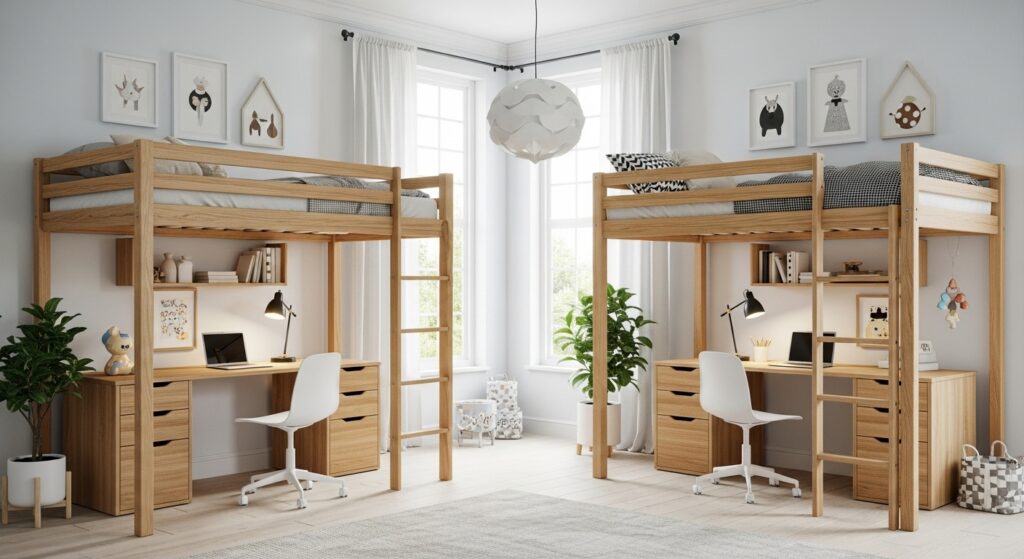
Loft beds instantly create additional square footage by elevating the sleeping area. This provides an opportunity to add workstations, study desks, or storage underneath without crowding the room. It’s perfect for siblings who need their own designated study zones within the same bedroom.
This type of setup supports productivity while keeping the room organized and spacious. The extra functionality below the loft bed helps each occupant have a personal area they can enjoy, boosting independence and comfort in shared environments.
6. Sliding Door Wardrobes
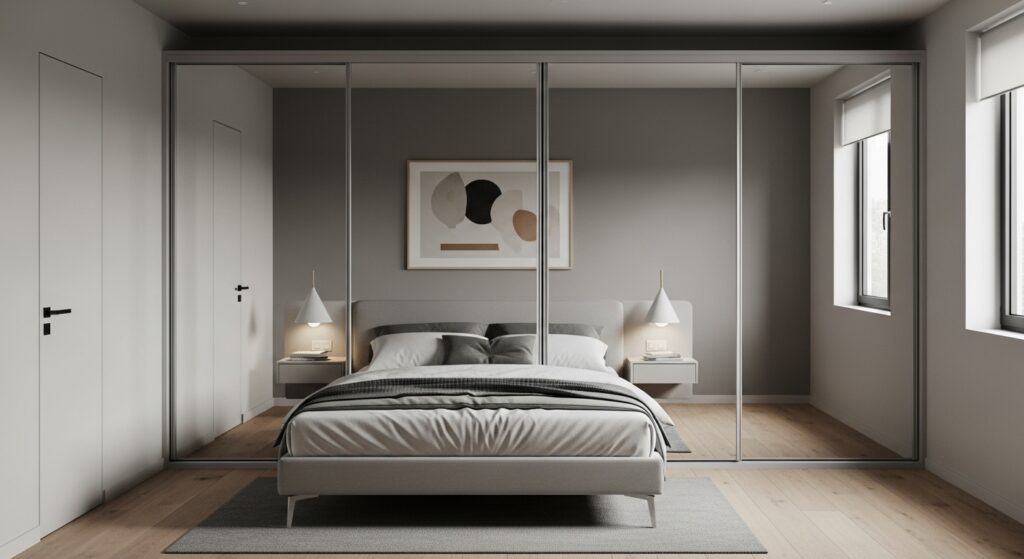
Sliding wardrobes are excellent for small rooms because they eliminate the need for door clearance space. This makes them perfect for shared bedrooms where storage must be accessible yet unobtrusive. A well-designed wardrobe with labeled or divided sections ensures each person has equal room for their belongings.
With mirror panels or warm finishes, sliding wardrobes can enhance the aesthetic appeal and make the room feel larger. Organized storage is a must in shared spaces, and sliding wardrobes are one of the best ways to achieve that without sacrificing style.
7. Under-Bed Storage Drawers
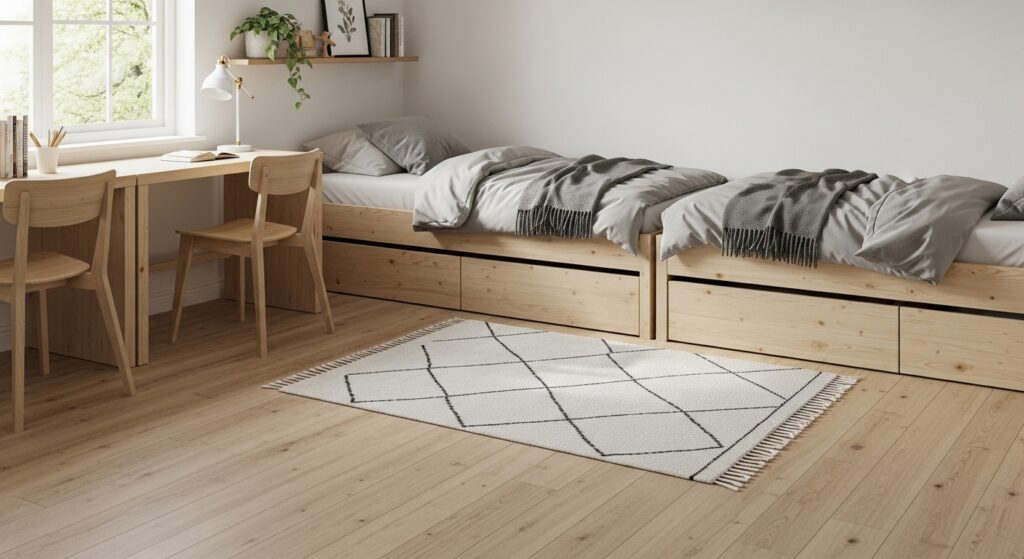
In small shared bedrooms, under-bed space can become a hidden organizational gem. Investing in rolling or built-in drawers keeps items neatly stored without taking up extra room. Each person can claim a different set of drawers, ensuring fair and easy access to personal belongings.
This method not only reduces clutter but also keeps the room visually clean and open. Under-bed storage helps maintain a sense of order, especially when the bedroom is regularly used for studying, sleeping, and playing. It’s practical, discreet, and efficient.
8. Curtain Dividers for Privacy
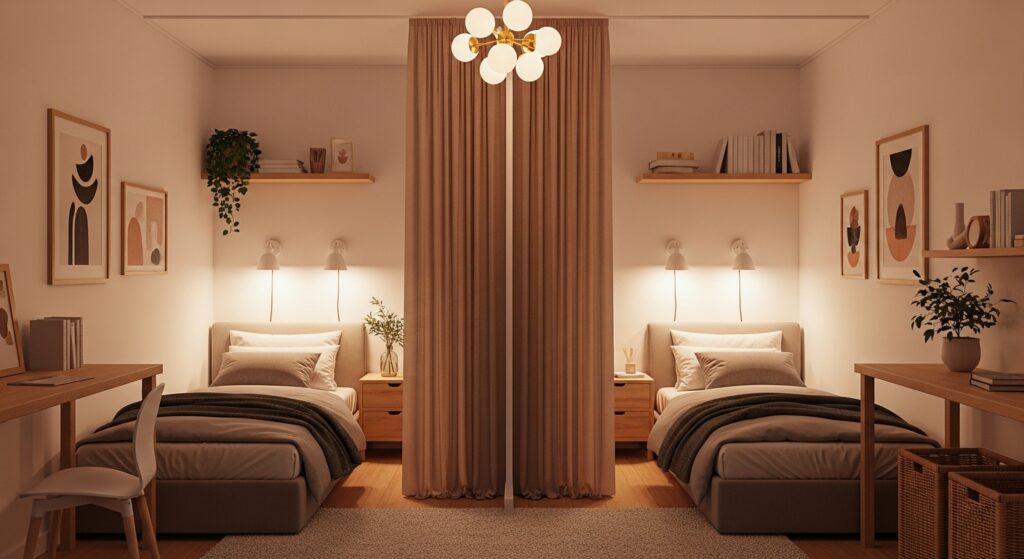
Curtain dividers are a budget-friendly way to create privacy zones within a shared space. They’re easy to install and move, making them perfect for renters or families expecting future layout changes. Soft fabric curtains also add texture and warmth to the room, enhancing the overall ambiance.
This solution helps each occupant feel like they have their own personal retreat without enclosing the room permanently. Curtains allow flexibility—open them for shared time or close them for privacy. It’s an ideal approach for siblings with different sleep schedules or personal preferences.
9. Fold-Down Desks
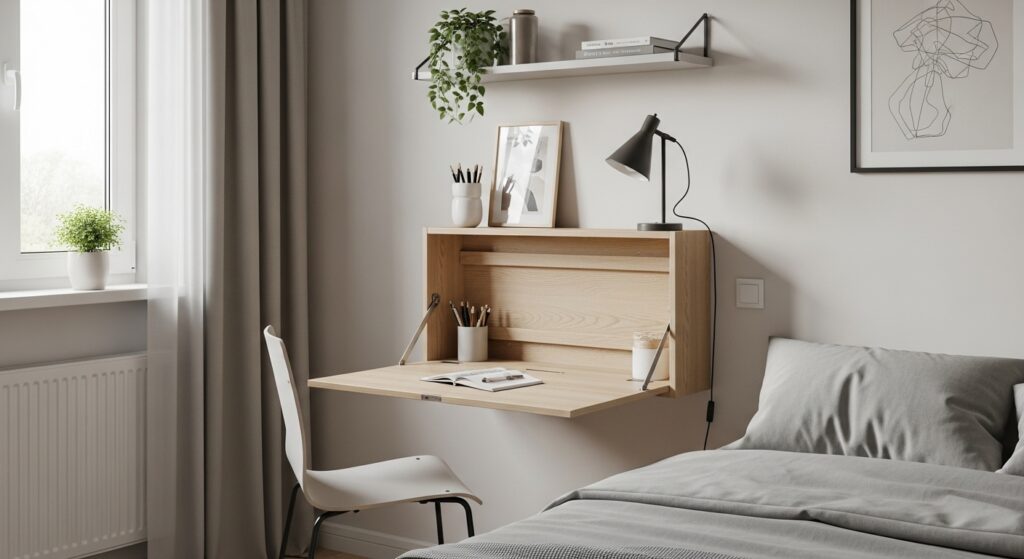
Fold-down desks are excellent space-saving tools, especially for shared rooms where floor space is limited. These wall-mounted desks fold neatly away when not in use, leaving the room uncluttered and open. Each occupant can have their own fold-down station for studying, drawing, or working.
This ensures that both individuals have productivity zones without competing for space. The sleek design of fold-down desks also contributes to a modern, streamlined look. They’re practical, stylish, and perfectly suited for multifunctional shared bedrooms.
10. Personalized Wall Art for Each Side
Personalized wall art helps each person feel connected to their half of the room. Whether it’s framed photos, posters, or custom prints, adding individual style enhances comfort and belonging. This approach fosters respect for personal identity even in a shared environment.
Balancing the artwork on both sides maintains visual harmony while giving each person control over their area. It’s an easy, affordable, and impactful way to elevate a shared bedroom without major renovations or furniture changes.
11. Over-Bed Shelves
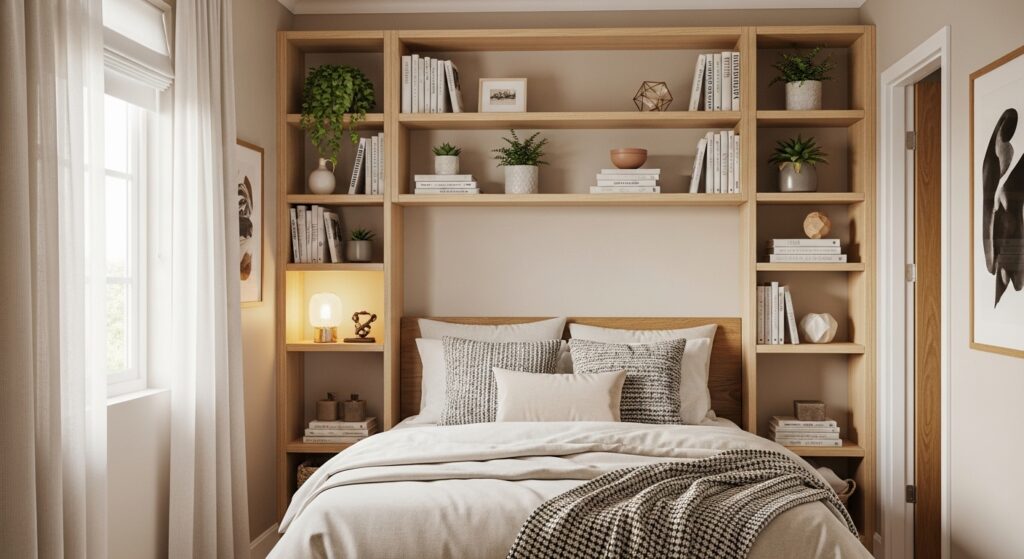
Over-bed shelving creates extra storage space exactly where it’s needed without using up valuable floor area. These shelves are perfect for storing books, décor, or small bins. Each occupant can keep personal items close to their bed, reducing clutter in other parts of the room.
Properly installed shelves add style as well as function. You can use matching or complementary décor to create a polished and cohesive look. Over-bed shelving is especially useful in small shared bedrooms where storage is limited but personality is not.
12. Matching Bed Frames With Different Bedding
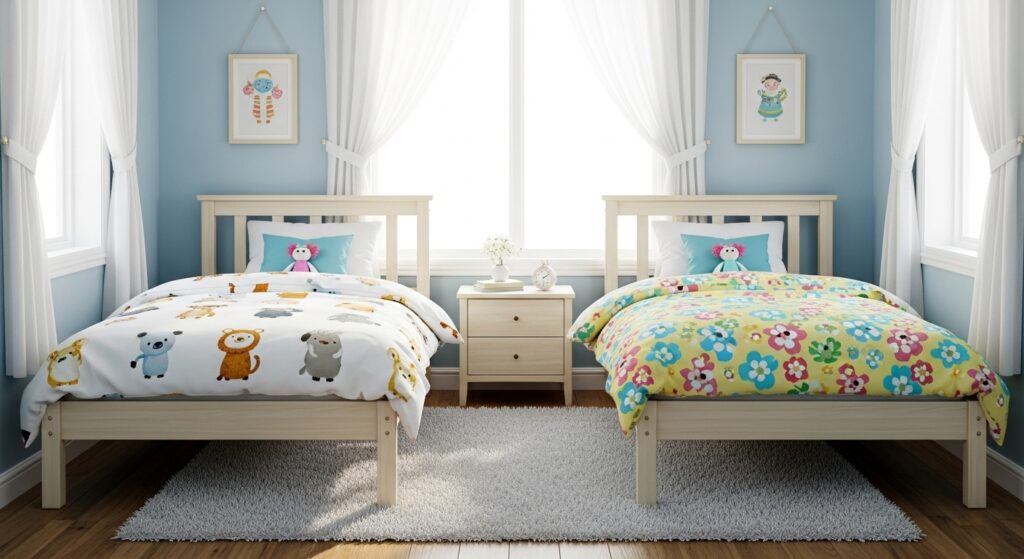
Matching bed frames bring visual consistency to the room, while different bedding lets each person express their personality. This approach creates a unified aesthetic without sacrificing individuality. It’s ideal for shared rooms among siblings, roommates, or guests.
The balance between uniformity and customization makes the space feel curated and intentional. Matching frames keep the room orderly, while the varied bedding adds charm. This combination ensures the bedroom feels both stylish and welcoming.
13. Pegboard Wall Organizers
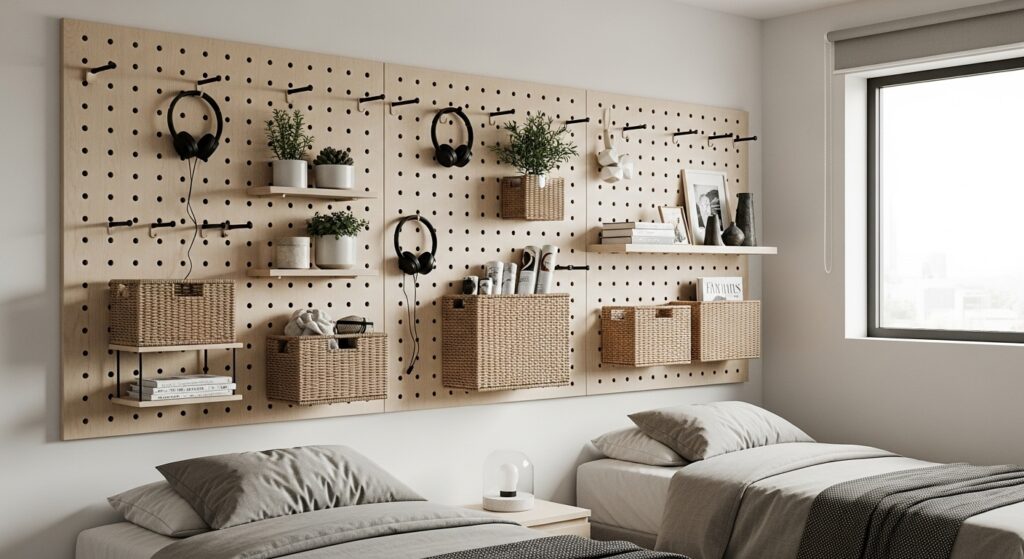
Pegboards are versatile, customizable, and extremely helpful in small bedrooms where wall space matters. These boards allow occupants to hang baskets, hooks, and shelves in any arrangement they like. Each person can create their own section, giving them autonomy over their belongings.
The pegboard system encourages organization and reduces clutter on dressers or desks. It brings an artistic touch to the room when styled creatively. Pegboards are especially great for shared spaces that require flexible storage solutions.
14. A Shared Reading Nook
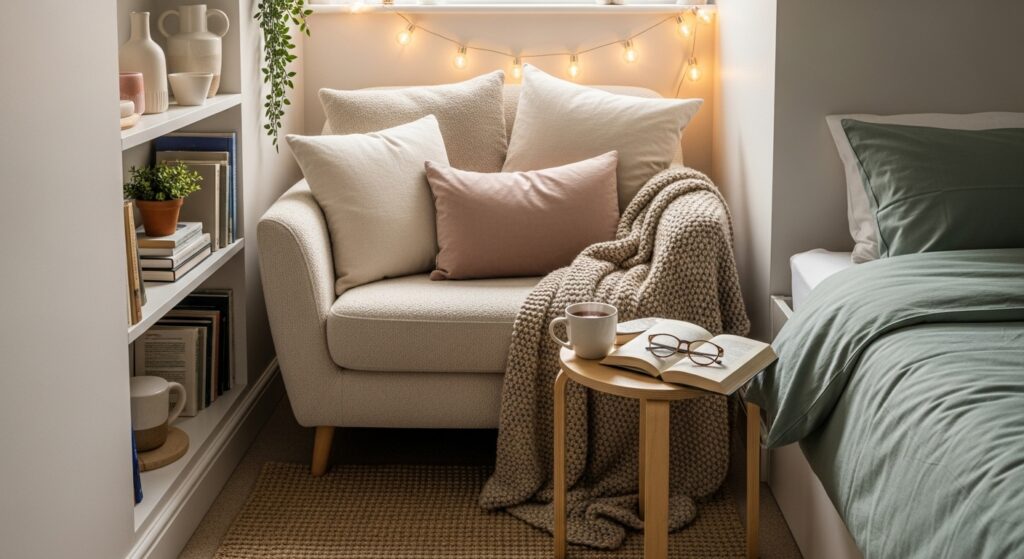
A cozy reading nook can bring a warm and inviting feel to a shared bedroom. Create this space by placing a small bench, floor cushions, or beanbags in a corner. This becomes a shared relaxation area where siblings or roommates can unwind together or separately.
Adding soft lighting, throw pillows, and a small bookshelf transforms the nook into a welcoming retreat. It also encourages quiet time and a sense of shared comfort within the room. The nook becomes a cherished area that enhances connection and calmness.
15. Multi-Compartment Dressers
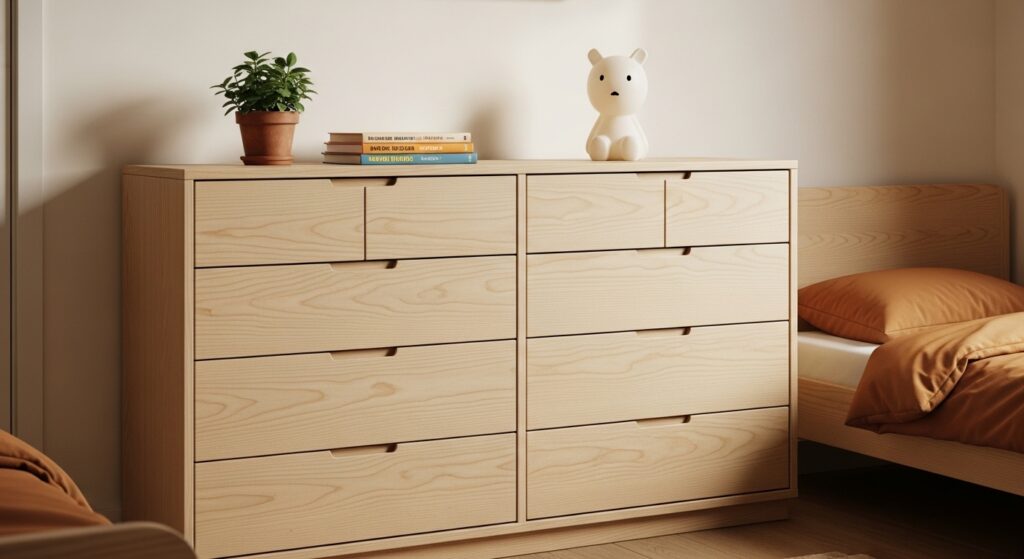
A dresser with multiple compartments is ideal for keeping clothing and accessories organized in a shared room. Look for dressers with many drawers or customizable dividers so each occupant can have equal space. A clean, thoughtfully structured dresser helps reduce mess and maintain harmony.
This storage solution also enhances the room’s aesthetic, especially when styled with minimal décor on top. Multi-compartment dressers make shared living easier by giving everyone a fair and organized system to manage their belongings.