
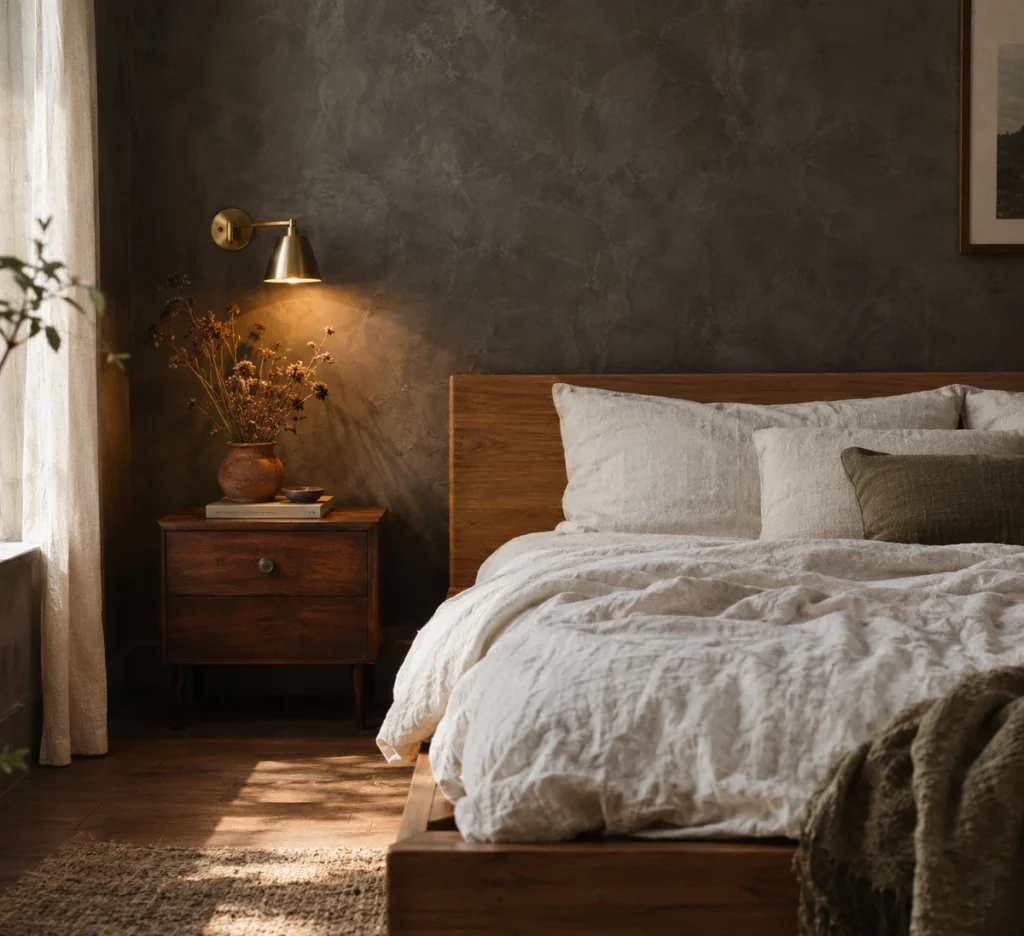
Dark Grey Limewash Bedroom Wall Ideas for a Moodier Vibe
Transforming Your Space with Soft Depth and Deep Undertones
Standard flat black or charcoal paint can sometimes turn a bedroom into a sterile box. If you want a sanctuary that feels cozy, quiet, and sophisticated, a dark grey limewash bedroom design offers rich depth without the harsh reflection of synthetic paints.
Limewash is a traditional coating made from slaked lime and natural pigments. Unlike modern acrylic finishes, it absorbs into porous surfaces, drying into a soft, chalky, suede-like texture. When applied in deeper shades like graphite, slate, or onyx, it creates a cloudy, movement-filled backdrop that feels grounded and high-end.
Whether you plan to coat all four walls or try a single grey limewash accent wall behind bed frames, this guide walks through practical application techniques, color styling, and design pairings to help you get the look right.
Why Choose Dark Grey Limewash Finish?
A moody bedroom requires balance. Deep colors naturally visually pull walls inward, creating intimacy, but flat eggshell or matte latex paint can look dull when light hits it.
- Natural Light Diffusion: Lime crystals within the paint reflect light at varying micro-angles, softening harsh sun glares and adding subtle warmth during daylight.
- Low Chemical Footprint: Authentic limewash has zero synthetic binders and exceptionally low off-gassing, keeping your sleeping space free from elevated levels of volatile organic compounds (VOCs).
- Tactile Texture: It emulates raw stone, weathered plaster, or an industrial concrete look grey limewash bedroom wall, giving your space immediate character.
Essential Dark Grey Limewash Paint Brush Stroke Techniques
Achieving the characteristic mottled texture of a moody dark grey bedroom limewash wall comes down to brush movement and moisture management. You cannot apply limewash with a standard paint roller; it requires a thick masonry brush with long, natural bristles.
| Technique | Brush Pattern | Resulting Aesthetic |
|---|---|---|
| Cross-Hatch (X-Stroke) | Overlapping “X” motions | Soft, cloud-like suede movement |
| Vertical Dragging | Downward, sweeping strokes | Architectural, linear plaster effect |
| Cloud Stippling | Random circular feathered edges | Softened concrete or stone patina |
Step-by-Step Application Guide
- Prep the Base Coat: Apply a mineral primer or acrylic primer specified by your paint manufacturer. Standard latex paint prevents limewash from soaking in, so a specialized primer is non-negotiable.
- Dilute the Paint: Limewash arrives thick. Dilute your dark grey limewash paint with clean water (usually 10% to 20% by volume) to ensure a workable, fluid consistency.
- Keep a Wet Edge: Lime paint dries rapidly. Work in small sections, sweeping your brush in dynamic cross-hatch patterns, and never let an edge dry completely before joining the next section.
- Apply Layer Two: Let the first coat cure for at least 8 to 12 hours. The true shade only appears after the finish dries completely. Apply the second coat thinner than the first to build up natural contrast and charcoal grey limewash bedroom texture.
How to Style Dark Grey Limewash Walls
Once your walls are finished, balancing dark, textured surfaces with surrounding elements keeps the room from feeling heavy or overly dim. Here is a breakdown of key design layers:
1. Warm Wood Elements
Deep grey has natural cool undertones. To ground the room, introduce warm timber furniture. A raw oak bed frame, walnut nightstands, or vintage teak dressers break up the cool charcoal tones with natural organic grain.
2. Layered Textiles and Linens
Soft textiles contrast against chalky walls. Choose washed linen bedding in off-white, oatmeal, or warm clay tones. Avoid stark white linens, which create a harsh contrast; muted creams soften the overall palette.
3. Intentional Lighting
Lighting changes everything with textured walls. Avoid overhead recessed lights directly above the bed, which cast downward shadows. Instead, install wall sconces with warm bulbs (2700K) that wash light horizontally across the wall to highlight brush movements.
4. Organic Accents
Bring in greenery or dry botanicals to complete the room. Deep grey walls form an incredible backdrop for natural terracotta pots, dried eucalyptus, or simple indoor plants. Just as you might use half-barrel planter ideas to add rustic structure outdoors, bring scaled-down clay or stone vessels indoors to match the raw plaster feel.
Designing Small vs. Large Bedrooms
Dark paint can work in spaces of any size, provided you adjust your layout and lighting strategy accordingly.
Small Bedrooms
If you are figuring out how to style dark grey limewash walls in a tight space, focus on an accent wall directly behind the bed. Keep the adjacent walls a soft greige or light plaster color. This focuses attention on the headboard area without shrinking the entire room. If you are looking to maximize compact floor plans elsewhere in your home, the principles used to decorate a small living room—such as low-profile furniture and elevated lighting—apply directly to small moody bedrooms.
Large Bedrooms
In spacious master suites, consider wrapping all four walls and the ceiling in a cohesive deep shade like graphite. This creates an enveloping, cocoon-like atmosphere. You can keep budget considerations balanced by exploring affordable living room decor ideas and applying similar cost-effective styling tactics—like thrifted brass mirrors or DIY canvas art—to fill large wall spaces without overspending.
Care and Long-Term Maintenance
Limewash is durable, but because it lacks synthetic plastic coats, it requires gentle cleaning methods:
- Dusting: Wipe walls gently using a dry microfiber cloth or soft feather duster.
- Spot Cleaning: Do not scrub with harsh chemical sprays. Wipe small scuffs with a damp cloth diluted with a tiny bit of mild dish soap.
- Touch-Ups: Keep a small portion of your diluted limewash stored in an airtight jar. If a wall gets damaged, brush on a thin layer using the same cross-hatch motion to blend patch repairs effortlessly into the existing pattern.