There’s a reason your living room still feels a little off no matter how many throw pillows you buy. Indoor house plants aesthetic isn’t just a Pinterest trend — it’s one of the most affordable, personality-driven ways to completely transform the energy of a space. And once you get it right, you won’t look at a bare shelf the same way again.
Why the “Plants as Decor” Mindset Is Changing How People Design Their Homes
A few years ago, I had a tiny apartment in Lahore with white walls, a beige couch, and exactly zero personality. I bought a snake plant almost by accident — it was on sale at a local nursery, I had a corner that felt sad and empty, and I figured “how hard can it be?” Six months later, that one plant had turned into eleven, and my apartment had been featured three times on my friend’s interior design Instagram. I hadn’t bought a single new piece of furniture.
That’s the real power of bringing the outdoors inside. Plants don’t just add greenery — they add texture, height, movement, and life to a room in a way that art prints and furniture simply can’t replicate.
The shift happening right now in home design is significant. More people — especially renters who can’t knock down walls or repaint — are turning to plants as their primary design tool. According to Pinterest trend data, searches around indoor house plants aesthetic have surged dramatically over the past year, driven largely by younger homeowners and apartment dwellers who want their spaces to feel curated and intentional without spending a fortune.
How to Actually Build an Indoor Plant Aesthetic (Not Just Buy Random Plants)
Here’s where most people go wrong: they buy plants impulsively, scatter them around the room, and then wonder why it looks cluttered instead of cozy. Building a real plant aesthetic is more like styling a bookshelf than filling a garden bed — it requires intention.
Start With a Visual Theme, Not a Plant List
Before you buy anything, decide what feeling you want the room to have. There are a few distinct indoor plant aesthetics that are dominating right now:
The Jungle Maximalist Look — Big, dramatic leaves. Monstera deliciosa, bird of paradise, giant philodendrons. This style works best in rooms with high ceilings and good natural light. The goal is lush abundance — every corner filled, trailing vines cascading from shelves, oversized ceramic pots on the floor.
The Minimal Zen Look — Clean lines, muted tones, fewer plants but more considered placement. Think a single fiddle-leaf fig in a white textured pot, or a cluster of three succulents on a windowsill. Japanese design influence is strong here — negative space is part of the aesthetic.
The Cottagecore Botanical Look — Soft, romantic, a little wild. Pothos trailing from macramé hangers, dried pampas grass in terracotta vases, air plants tucked onto driftwood shelves. This one photographs beautifully and works in smaller spaces.
The Dark Academia Moody Green Look — Deep green plants against dark walls or rich wooden shelves. Rubber plants, ZZ plants, and cast iron plants thrive in lower light and look incredible in moody, book-lined rooms.
Pick one direction and commit. Mixing aesthetics is what makes rooms feel chaotic instead of designed.
Layer Your Plants Vertically — This Is the Game Changer
One of the most common mistakes in plant styling is keeping everything at the same height. Your eye needs movement to find a space interesting. Think of your room in three visual layers:
Floor level — Statement plants. Bird of paradise, olive trees, large fiddle-leaf figs, tall snake plants. These anchor the space.
Surface level — Mid-height plants on tables, shelves, windowsills, and side tables. Pothos, Chinese evergreen, peace lily, and smaller potted herbs work well here.
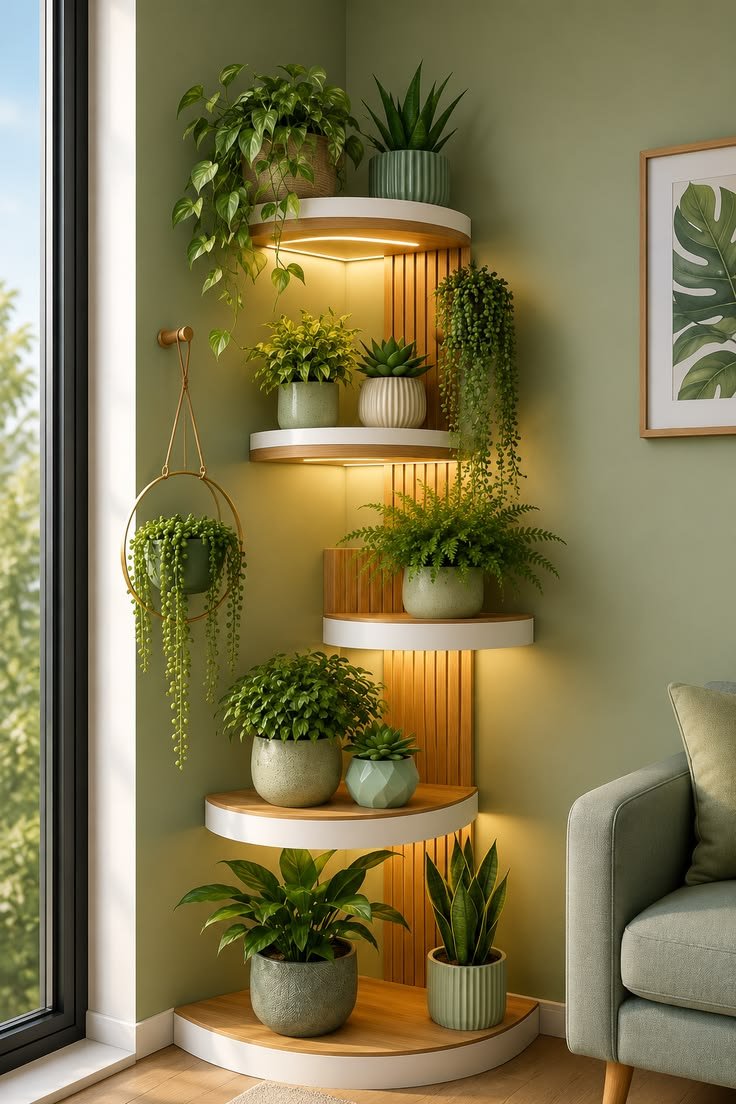
Elevated level — Hanging plants, wall-mounted planters, or plants on high shelves that trail downward. String of pearls, heartleaf philodendron, and ivy all cascade beautifully.
When you have all three levels working together, the room feels layered and intentional — not like someone just placed plants wherever there was empty space.
Pots Matter More Than People Think
The pot is half the aesthetic. A gorgeous monstera in a plastic nursery pot looks like it just arrived from the garden centre. That same plant in a hand-thrown terracotta pot or a ribbed white ceramic planter looks like it belongs in an interiors magazine.
A few guidelines that actually hold up:
- Terracotta is warm, earthy, and works with almost everything — cottagecore, minimalist, boho. It’s also breathable, which most plants prefer.
- Matte ceramic (white, cream, sage, dusty pink) reads as contemporary and clean. Great for minimal and Scandi aesthetics.
- Woven baskets add texture and warmth, work well as pot covers for larger floor plants.
- Dark glazed ceramic or black matte pots feel moody and modern — perfect for dark academia or maximalist looks.
Avoid mixing too many different materials and colors. Pick two or three that complement your room’s palette and stick to them across all your pots. Cohesion is what makes a collection look styled rather than random.
The Best Plants for Aesthetic Appeal (That Are Actually Easy to Keep Alive)
Let’s be honest — a dead or struggling plant destroys the vibe immediately. Here are plants that deliver on aesthetics and aren’t secretly trying to die on you:
Monstera deliciosa — The undisputed king of the aesthetic plant world. Those split leaves are instantly recognizable and dramatic. Needs bright indirect light and water roughly once a week. Grows fast enough to feel rewarding.
Pothos (Epipremnum aureum) — Trailing, lush, incredibly forgiving. You can basically ignore a pothos for two weeks and it’ll be fine. Perfect for shelf styling and hanging planters.
Snake plant (Sansevieria) — Clean, architectural lines. Thrives in low light and only needs water every 2–3 weeks. Works beautifully in minimalist and modern spaces.
Rubber plant (Ficus elastica) — Deep burgundy or dark green glossy leaves. Stunning in moody rooms. Medium light, moderate watering.
String of pearls — One of the most photogenic trailing plants you can grow. Looks incredible in hanging ceramic pots. Needs bright light and infrequent watering.
Peace lily — One of the few flowering plants that genuinely thrives in lower light. White blooms, dark green leaves, elegant silhouette.
Small Space? Here’s How to Make It Work
Living in a small apartment doesn’t mean you have to compromise on plant aesthetics — it just means you have to be smarter about it.
Use vertical space aggressively. Wall-mounted plant shelves, pegboard systems with pot holders, and floating shelves stacked floor-to-ceiling turn a wall into a living installation. This is one of the most dramatic and space-efficient things you can do in a small room.
Go for one large statement plant instead of many small ones. A single large fiddle-leaf fig or bird of paradise in a corner makes more visual impact than twelve tiny pots scattered around. And it’s easier to maintain.
Use a window as your focal point. Cluster your plants near your best light source. In a small space this not only looks intentional — it actually keeps your plants healthier, which means they stay looking good longer.
Trailing plants over bookshelves are a small-space person’s best friend. A single pothos on top of a bookcase will trail down across the books over time, turning an ordinary shelf into something that looks straight out of a lifestyle magazine.
Real Talk: Maintaining the Aesthetic Without Burning Out
Here’s the part no one talks about — plant aesthetics require some maintenance to stay looking good. Yellowing leaves, dusty foliage, overcrowded pots: these things happen and they need to be dealt with.
Build a simple monthly routine: wipe down large leaves with a damp cloth (dust blocks light absorption and makes plants look dull), prune yellow or dead leaves immediately, and rotate your plants quarterly so all sides get even light exposure.
One thing I learned the hard way — don’t buy plants faster than you can learn to care for them. Start with five to eight plants you know well, get them thriving and styled, and then expand. A room with eight healthy, beautifully potted plants looks a thousand times better than a room with twenty struggling ones.
Where to Find Aesthetic Plant Inspo That’s Actually Achievable
Pinterest remains the strongest visual reference for indoor plant aesthetics, but the challenge is that many of those images represent spaces with professional styling and lighting. For more realistic inspiration, look at plant communities on Instagram and Reddit — real people in real apartments showing what genuinely works on a budget and in imperfect light conditions.
Some of the most beautiful plant-filled spaces I’ve seen belong to people with north-facing windows and IKEA furniture. It’s never about the space you have — it’s about the intention behind how you use it.
The thing about committing to an indoor house plants aesthetic is that it grows with you — literally. The monstera you bring home as a small potted plant will be brushing your ceiling in two years. The pothos trailing from your shelf will reach the floor eventually. Unlike furniture that stays static, your living space slowly comes alive, shifting with the seasons, growing in ways that feel almost personal.
That’s not just decorating. That’s building something.