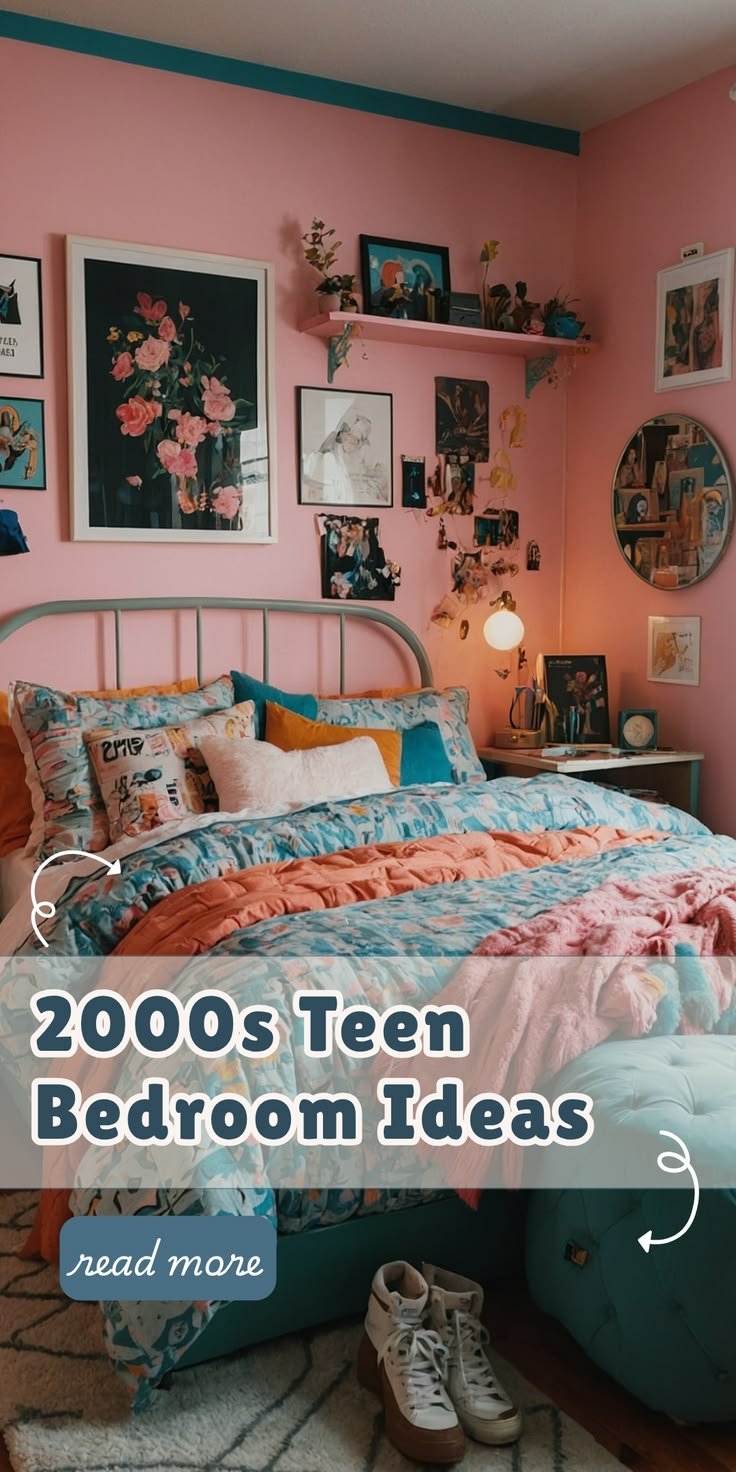
If you grew up in the early 2000s, you already know that your 2000s teen bedroom was more than just a place to sleep. It was your whole world — posters floor to ceiling, a chunky iMac or Dell desktop humming in the corner, and a CD binder stuffed with everything from Destiny’s Child to Dashboard Confessional. And somehow, in 2024, Gen Z has decided that aesthetic is everything again.
But here’s the thing — this isn’t just nostalgia for the sake of it. People are genuinely recreating these rooms, hunting for specific decor on thrift apps, and pinning thousands of inspiration boards trying to nail that exact early-aughts vibe. Whether you lived it the first time or you’re discovering it for the first time through TikTok rabbit holes, there’s something deeply comforting about the chaos and color of that era.
Why the 2000s Teen Bedroom Trend Is Everywhere Right Now
Let’s be real — the aesthetic landscape of the early 2000s was a lot. Butterfly clips, lava lamps, inflatable furniture, walls plastered with pages ripped straight out of Tiger Beat magazine. It wasn’t minimal. It wasn’t curated. It was loud, personal, and completely unapologetic.
And that’s exactly why it’s resonating so hard right now.
We’ve spent years in the era of clean lines, beige tones, and “aesthetic” Instagram bedrooms that all look like they came from the same IKEA catalog. There’s a growing fatigue with that. People — especially younger people — are craving bedrooms that feel lived in, that feel like them, not like a showroom.
Take my own experience as an example. I was 13 in 2002. My bedroom walls were covered in a patchwork of N*SYNC posters and hand-drawn sketches, a string of blue bubble lights ran along the ceiling, and I had a beaded curtain separating my “chill zone” from the rest of the room. Did it look chaotic? Absolutely. Did it feel like the most personal, creative space I’ve ever had? Also absolutely. No “aesthetic” bedroom I’ve decorated as an adult has ever felt quite as mine as that did.
That emotional connection is a huge part of why this trend is trending on Pinterest. The search data doesn’t lie — people are actively looking for this specific vibe, and they’re hunting for ways to bring it back.
What Actually Defined the 2000s Teen Bedroom Look
Before you start decorating, it helps to understand the actual building blocks of this aesthetic. Because the 2000s wasn’t one look — it was a glorious collision of several micro-trends all happening at once.
The Color Palette Was Anything But Neutral
Hot pink, electric blue, lime green, deep purple — the 2000s were not afraid of color. Think shag rugs in wild tones, bedding sets in bold patterns, and those iconic blacklight-reactive posters. If your color palette didn’t have at least three shades that “clashed,” you were doing it wrong.
Texture Was a Big Deal
Fluffy everything. Fuzzy pillows, shaggy throw blankets, fuzzy photo frames (yes, those existed). There was also a strong velvet moment — velvet hangers, velvet-covered photo albums, velvet jewelry boxes. The physical experience of the room mattered as much as the visual.
Walls Were a Canvas, Not an Afterthought
This is the one element that most defined the 2000s teen bedroom. Nobody was doing gallery walls with matching frames. Walls were covered in magazine cutouts, Polaroid photos, concert tickets, AIM printouts of inside jokes, and printed-out lyrics. The more personal and chaotic the wall, the better.
Lighting Was Mood-Setting and Specific
Lava lamps. Fiber optic lamps. String lights (but in shapes — stars, chili peppers, flowers, not just plain bulbs). Blacklights. Neon signs were just starting to be a thing. The goal was to make your room feel like somewhere you wanted to hang out, not just sleep.
Tech as Decoration
A boxy TV with a built-in DVD player sitting on a stand. A bulky desktop computer. A CD tower. A portable CD player hooked up to small speakers. These weren’t hidden — they were displayed proudly because they represented independence and access to your music, your movies, your AIM conversations. Today, you can lean into this by using retro-styled tech (there are some great Bluetooth speakers designed to look vintage) or by actually tracking down working pieces of era-specific tech at thrift stores.
How to Actually Recreate This Vibe Without It Looking Like a Costume
Here’s where a lot of people go wrong when they try to recreate a throwback aesthetic — they go too literal. They end up with something that looks like a costume, not a real lived-in space.
The trick is to anchor the room in the feeling of the 2000s, not every single specific element. Pick three or four signature pieces and let them do the heavy lifting, then fill in with more understated choices.
Start with one statement piece. A lava lamp on a nightstand immediately sets the tone. A bright shag rug defines the floor. An inflatable chair tucked in the corner reads immediately as “early 2000s.” You don’t need all of these — you need one.
Do the wall collage, but thoughtfully. Instead of just slapping random images up, choose a theme. Maybe it’s all your favorite bands from that era. Maybe it’s a mix of Polaroids of your actual life now combined with era-appropriate magazine clippings. The 2000s wall collage was always personal — make sure yours is too.
Mix some vintage finds with modern basics. The bedding doesn’t need to be era-specific. A deep purple or hot pink duvet cover from any modern retailer will work fine. The period-specific elements should be the accents — the lava lamp, the beaded curtain in the doorway, the fuzzy photo frame, the inflatable storage ottomans.
Add the lighting layer last. String lights (star-shaped if you can find them), a color-changing LED setup (which didn’t exist in the 2000s but fits the spirit of it), and something neon or glowing. The 2000s teen bedroom was never harsh overhead-lighting-only. It was always ambient, always mood-lit.
Don’t forget the music. This one’s free. A playlist of early 2000s bangers playing through whatever speaker you own transforms the vibe of a room instantly. Hilary Duff, Avril Lavigne, Usher, Simple Plan — these artists are inseparable from the era. If you’re decorating and you want to get into the headspace, just press play.
Where to Find 2000s Teen Bedroom Decor Today
You don’t have to pay collector prices to get this look. Here’s where people are actually sourcing these pieces:
Thrift stores and Goodwill are genuinely your best friend for this. Lava lamps, chunky picture frames, beaded curtains, old CD towers, oddly specific decorative pieces — all of these rotate through thrift stores constantly. If you live near a larger city, you’ll find them even faster.
Facebook Marketplace and OfferUp for bigger pieces — inflatable furniture occasionally shows up, and old boxy televisions or vintage-looking electronics turn up often. Just search “Y2K decor” or “retro bedroom” and you’ll see what’s out there.
Etsy for the more specific or handmade elements — custom neon signs, iron-on patches, handmade beaded curtains, and era-appropriate prints. Etsy sellers have fully caught on to this trend.
Amazon and Target for the stuff that never actually went away — shag rugs in bold colors, lava lamps (they still make these), and string lights in fun shapes are all readily available in modern retail at pretty affordable prices.
The Real Reason People Keep Coming Back to This Aesthetic
There’s something worth saying here that goes a little deeper than just “retro is cool again.”
The 2000s teen bedroom was one of the last widely-shared cultural moments before social media fully took over. When you decorated your bedroom in 2002 or 2004, you weren’t thinking about how it would photograph. You weren’t creating content. You were just creating your space, with the things that genuinely made you happy, without any awareness that anyone else would ever see it or judge it.
That’s increasingly rare now, and people can feel its absence. The rise of perfectly curated bedroom aesthetics on social media has given us beautiful rooms — but also a low-key pressure to decorate for an imagined audience rather than for yourself.
The 2000s teen bedroom, chaotic and colorful and deeply personal as it was, represents something a lot of people are craving: a space that’s just yours. Not for views. Not for likes. Just for you.
And that’s a trend worth bringing back.
